

A tree can look great one day. Then become a big problem the next. It’s not much that can go wrong. Heavy rain, soil. Just one strong wind blow can make a tree go past its limit. When that happens the risk is already there.
Most homeowners don’t think about it until something feels off. A branch drops. The tree leans a little more than before. That’s usually the moment people start searching for emergency tree service. This guide breaks down the signs you shouldn’t ignore and what they actually mean.
1. A Tree Starts Leaning After Wind or Rain
A tree does not need to fall to become dangerous. A change in angle is often the first clue that something below the ground has failed. Rain, wind, root damage, and soft soil can all cause that shift. Here are the main things to check around a leaning tree.
The lean is new
Some trees grow at a slight angle for years and stay stable. A new lean is different. If the tree looked straight last week and now points toward your house, that change matters.
Fresh movement usually points to root failure or soaked soil. Central Florida gets heavy rain, and wet ground can lose its grip fast. A large tree can then move inch by inch, then drop with very little warning.
The soil is lifting near the roots
Look at the ground around the base. If one side is cracking or rising, the root plate may be pulling out of the soil. That means the tree is starting to tip over.
This is one of the clearest signals that you need emergency tree removal. The tree has already started to fail. Waiting for better weather or more daylight does not remove the risk.
The tree leans toward something valuable
Direction matters. A lean toward open land is one thing. A lean toward a roof, a driveway, a pool cage, or utility lines is a different problem.
If you find yourself searching for tree service near me after spotting that kind of lean, trust that instinct. A professional crew can inspect the tree and decide if removal is the safest next step.
2. Large Limbs Crack, Split, or Hang Over the Yard
Branches tell you a lot about a tree’s condition. A healthy limb should stay attached and carry weight without deep cracks. Once large limbs start splitting or dropping, the tree has entered a more dangerous stage. The issues below often show up before a full failure.
A branch hangs after a storm
A partially broken limb can stay lodged in the canopy for hours or days. It looks stuck, but it is not secure. One gust of wind or one small shift can send it down.
That threat gets worse over patios, entryways, and driveways. Children, pets, and parked cars are all exposed in that situation. A hanging limb is one of the most common reasons homeowners call for emergency tree service.
The crack runs into the main branch union
A split near the point where a branch meets the trunk is serious. That area carries weight and movement. Once the wood opens there, the branch loses strength fast.
The danger grows with oak trees, large pines, and old shade trees. Many Central Florida yards have mature trees close to homes, so branch failure can lead to roof damage in seconds.
Limbs keep falling from the same tree
One fallen branch after a storm is not rare. Several limbs from the same tree point to a larger issue. Internal decay, storm stress, old age, and dead wood can all be part of the problem.
At that stage, trimming may not fix the risk. The tree may need major reduction or full emergency tree removal. Airborne Tree Service often sees this after strong winds move through Marion, Sumter, and Lake counties.
3. The Trunk Has a Split, Crack, or Hollow Area
The trunk is the support column for the whole tree. Damage there carries more weight than damage in the outer canopy. A split trunk can fail under its own load. A hollow section can hide deep decay. The next signs point to a tree that needs quick attention.
A vertical crack appears in the trunk
A long crack in the trunk often shows stress from wind, old wounds, or internal weakness. It may start small, then widen after each storm. That is not cosmetic damage. It affects the structure of the entire tree.
You may see sap, exposed wood, or dark staining near the crack. Those signs tell you the tree is under strain. A certified crew should assess it right away.
The tree sounds hollow
Tap the trunk with a hard object. A hollow sound can point to decay inside the tree. The outer wood may still look solid, but the center may be weak.
A hollow trunk does not always mean instant failure, but large hollows raise the risk. Add wind, rain, and weight from long limbs, and the tree may not hold much longer.
The trunk has a major cavity or rot
Open cavities collect water and speed up decay. Soft wood around the base is another red flag. Fungi, dark wet spots, and crumbly wood all point to rot.
A decayed trunk often fails at the base. That is one of the hardest tree failures for a homeowner to predict. It looks stable until it is not. This is a common reason people call for tree service near me after they notice a tree start to look sick all at once.
4. The Tree Is Touching or Threatening Power Lines
Trees near power lines need special care. This is not regular pruning and it is not a weekend project. The risk includes fire, outage, shock, and falling debris. If the tree shows any of the conditions below, fast action matters.
Branches rest on service lines
Even a small branch on a line can become dangerous under wind load. The line can sag, spark, or pull loose. Homeowners should stay clear and call a qualified crew.
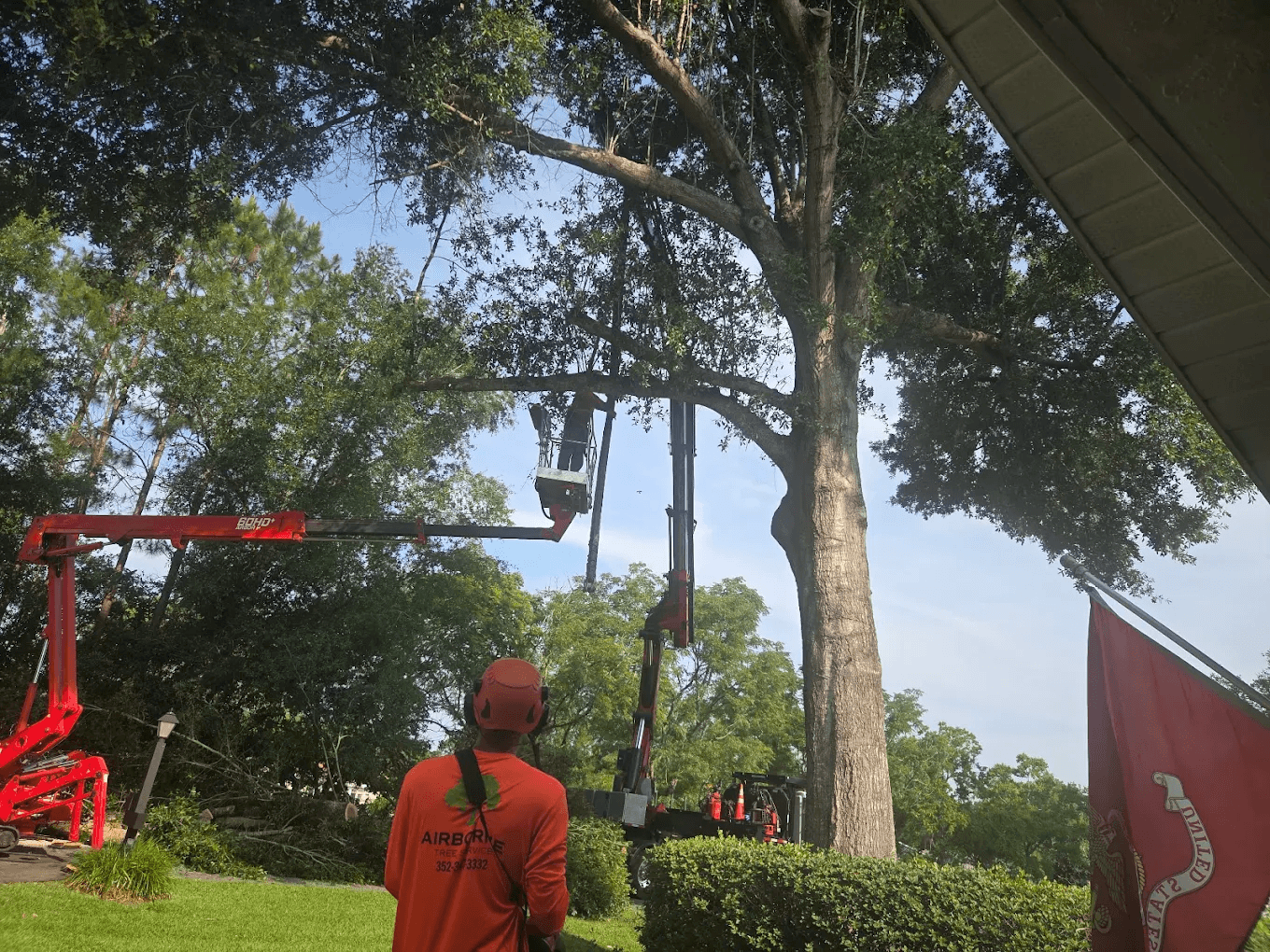
Airborne Tree Service handles high-risk removals with specialized equipment, including cranes and grapple saw trucks. That matters on jobs near homes, fences, and utility routes.
A damaged tree leans toward lines
A storm-damaged tree near a line does not need direct contact to create a problem. If it falls, it can take the line down with it. That can block roads, cut power, and create a hazard for anyone nearby.
This type of call often needs emergency tree removal. Speed matters, but control matters just as much. A rushed cut in the wrong spot can make the danger worse.
Dead limbs hang above utility areas
Dead wood can break with very little force. If those limbs sit above lines, meters, or service drops to the house, the margin for error is small. One failure can leave a homeowner with property damage and no power.
This is one area where skilled equipment makes a real difference. Airborne Tree Service has spent decades handling dangerous removals across Central Florida, and that experience shows on jobs with little room for mistakes.
5. The Tree Shows Clear Signs of Death or Severe Decline
A dead tree does not always fall right away. Some stand for months, even years. That can fool a homeowner into thinking there is time. Dead or declining trees lose strength over time, and pieces often fail first. The signs here show a tree that needs quick review.
Most of the canopy is bare
Seasonal leaf drop is normal for some trees. A canopy that stays thin, bare, or patchy through active growing periods is a problem. If most branches have no leaves, the tree may be dying.
Dead canopy means dead wood, and dead wood breaks. That risk rises over play areas, walkways, and parked cars.
Bark falls off in large sections
Loose bark can point to severe stress or death. A healthy tree should keep its bark attached and firm. Large missing sections expose wood and invite decay.
This often pairs with brittle limbs and a dry, lifeless canopy. A dead tree may stand in place, but it is losing strength the whole time.
Mushrooms or decay show near the base
Fungi near the root flare can signal decay below ground. That matters a lot. Root damage and trunk rot can make a tree fail from the bottom with little warning.
Homeowners often focus on what they can see in the top of the tree. The base tells a deeper story. If you spot fungi, soft wood, or hollow areas, a prompt inspection is the smart move.
Need Emergency Tree Service Now? Act Before the Damage Gets Worse
A dangerous tree rarely fixes itself. Small warning signs often grow into major property damage, blocked driveways, broken fences, and roof repairs. The safer move is a fast inspection from a crew that handles high-risk tree work every day.
Airborne Tree Service has served Central Florida since 1985. With a family-owned team brings 40 years of field experience, an ISA Certified Arborist, and specialized equipment for hard removals. If you need emergency tree service, or fast help from a trusted tree service near me, call Airborne Tree Service today.