
For your safety, it’s crucial to identify hazardous trees on your property. Catching the warning signs early can honestly prevent major damage or injuries. A dangerous tree isn’t just an eyesore; it’s a genuine threat, especially here in Central Florida where our unpredictable storms can quickly turn a weak tree into a disaster. For homeowners in places like Summerfield, Ocala, or The Villages, spotting these red flags is really the first step to keeping your family and property safe.
Trees are wonderful, but they can become dangerous over time because of disease, decay, or just natural weaknesses. If you ignore these clues, whether they’re subtle or super obvious, you could face some serious problems. We’re talking about limbs crashing onto your house or entire trees collapsing when the wind really picks up. Here at Airborne Tree Service, we’ve got over 40 years of specialized experience in high-risk tree removal, and we’re here to help you figure out these dangers and deal with them before they get out of hand.
What Makes a Tree Dangerous? Let’s Talk Risks
We label a tree as dangerous when its structure has flaws that make it likely to fail, especially if that failure could cause injury or damage. It’s not always about the whole tree coming down, either. It could be anything from a big branch snapping off to the entire thing uprooting. When we assess a dangerous tree, we’re checking its overall health, how solid its structure is, and the chances it might hit something important, like your house, car, or even a passerby.
You know, understanding these risks is crucial for folks in Central Florida. The intense heat, heavy rainfall, and hurricane season winds really put our trees through their paces. Things like a tree’s species, its age, and all the environmental stress it’s been through really affect whether it turns into a danger. For example, a big, old oak tree might stand up to strong winds better than a sick, weak pine. But honestly, any tree can become seriously risky if no one’s properly looking after it.
Early Signs of a Problem Tree
Spotting the initial clues of a dangerous tree can be challenging, but it’s a vital skill for homeowners. Trees often drop subtle hints before a major issue pops up. Just keeping an eye on your trees all year, not only after a bad storm, can help you catch problems early. It’s really worth it.
Often, the first thing you’ll notice is a change in the tree’s canopy, its leafy top. If the leaves look thin, are discolored outside of autumn, or are dying off on specific branches, that’s often a sign of trouble. Say you’re in Marion County and suddenly spot wilting or browning just on one side of a tree; that could point to a root problem or a disease affecting that section. Plus, lots of dead branches in the canopy, sometimes called "widow makers," are clear indicators of an unhealthy tree just waiting to drop limbs. These dead limbs can fall without warning, even on a calm day, posing a huge risk to anyone nearby.
What to Look For: Decay and Disease
Decay and disease silently weaken trees. They slowly but surely weaken the tree’s structure from the inside out. Often, you won’t see external symptoms until the problem’s pretty far along, which is a shame. However, knowing what to look for can definitely prompt you to call a certified arborist for an inspection sooner. I’ve seen it make all the difference.
Keep a close watch for any fungal growth on the trunk or branches. When you spot things like mushrooms, conks, or other bracket fungi pushing out from the bark, those are major clues that the wood inside is decaying. Honestly, these fungi are just the visible parts of organisms that are busy breaking down the tree’s wood. If you notice discolored or rotting wood near old wounds, cracks, or where branches used to be, it likely means decay is spreading. Peeling bark, cankers (those sunken or discolored spots), or even insect boreholes are also critical warning signs that your tree’s health is quickly deteriorating. If you observe these signs on a potentially dangerous tree, immediately consult a professional.
Structural Issues That Make a Tree Dangerous
Beyond just decay and disease, structural problems are a big reason a tree becomes a serious hazard. These issues mess with the tree’s physical strength, making it much more likely to break or fall, especially when bad weather hits. Honestly, spotting these problems often takes a sharp eye and, sometimes, an expert’s opinion. You don’t want to miss them.
Cracks or splits in the trunk or large limbs are definite red flags. These can range from small lines to deep separations extending right into the wood, signaling that the tree is struggling to support itself or has been under severe stress. Another significant structural problem is a leaning tree. While some trees naturally lean a bit, a sudden or severe lean, especially if the soil around the base is pushing up, suggests the roots are failing or it’s unstable. This is incredibly concerning for trees near buildings in places like Orlando or Kissimmee. Also, large dead branches, particularly those hanging over homes or driveways, are simply dangerous and contribute to the tree being a hazard.
When Stems Get Too Close (and Bark Gets Trapped)
One common structural flaw that can turn a tree into a hazard involves co-dominant stems or included bark. Co-dominant stems happen when two or more main stems grow at roughly the same pace from one spot, forming a ‘V’ shape instead of a strong ‘U’ shaped crotch. That ‘V’ shape means a weak attachment; the wood fibers just aren’t properly linked together.
Included bark, where bark grows inward from adjacent stems or branches, prevents strong wood-to-wood attachments. This creates a weak spot prone to splitting, especially under the strain of wind, ice, or heavy leaves. These structural weaknesses are often hidden to the untrained eye but pose a real threat, making the tree a prime candidate for dangerous removal if not addressed with cabling or professional pruning. For Lake County residents, understanding these subtle but critical defects can prevent unexpected tree failures.
Root System Concerns: A Hidden Hazard
A tree’s roots anchor it, providing stability and drawing vital nutrients and water. Root system problems often go unnoticed underground, yet they’re a primary reason hazardous trees fall. A compromised root system can quickly turn a healthy-looking tree into a ticking time bomb.
Fungal growth around the tree’s base is a sure sign of root issues. Mushrooms or conks near the soil line or on the root flare often indicate root decay. Additionally, a sudden shift or ‘heaving’ of the soil around the base, especially after heavy rain or strong winds, strongly suggests tearing roots and a tree losing its grip. Construction, compacted soil, or changes in grading can seriously damage a tree’s roots, weakening its ability to stand firm. Even minor root damage can lead to a significant part of the root system dying off, leaving the tree vulnerable.
Are the Roots Acting Up?
It can be tough to spot root decay or damage since so much of it happens out of sight, underground. But honestly, you’ll find some clear signs that can clue you in to potential issues with a dangerous tree’s base. The biggest giveaway is seeing fungal growths like mushrooms or conks pop up right at the trunk’s bottom or along the main root flare. These fungi absolutely love decaying wood, signaling that the root system is actively breaking down from the inside.
Another big red flag is when a tree, once standing tall and straight, starts to visibly lean, with soil pushing up on the opposite side. This
When Should You Call an Arborist About a Tree?
If you even suspect you’ve got a dangerous tree, calling a certified arborist is the smartest, safest move. Honestly, trying to diagnose or fix a big, shaky tree yourself is incredibly risky. You could easily cause more damage or, worse, get seriously hurt. A certified arborist has the training, knowledge, and experience to diagnose tree health issues, spot weak points, and recommend the best course of action.
They truly understand tree biology, pathology, and mechanics, allowing them to provide a thorough tree inspection. For homeowners in Wildwood, Fruitland Park, or Mount Dora, a local arborist offers insights specific to Central Florida’s tree species and environmental challenges. They’ll tell you if a dangerous tree can be saved with pruning, cabling, or bracing, or if removal is the only safe choice. Don’t wait until a storm proves you wrong; getting an assessment done ahead of time is always the way to go.
Why Professional Tree Inspections Matter
Getting a pro to inspect your trees isn’t just a quick peek. It’s actually a thorough check of the whole tree, from the very top branches down to its roots, all to figure out if there are any risks making it dangerous. Arborists use their specialized knowledge to spot those subtle hints of stress, decay, or structural problems that most of us would totally miss. They’re able to identify exactly what kind of disease or bug infestation is bothering the tree and really understand how it’s affecting the tree’s overall stability.
During an inspection, an arborist will carefully check for things like dead or dying branches, look for cracks or hollows in the trunk, assess the health of the root collar, and note any obvious lean or imbalance. They’ll also consider how close the tree is to important stuff like houses, power lines, or busy sidewalks. This helps them figure out the danger if the tree were to fall. Airborne Tree Service offers expert inspections, making sure true professionals who care about your property’s well-being thoroughly and safely evaluate your trees.
Stopping Trees From Becoming Dangerous
Taking steps ahead of time is key to keeping trees healthy and preventing them from becoming a hazard. Seriously, being proactive with tree care is almost always more effective and usually less expensive than dealing with an emergency later. Investing in your trees’ long-term health means they’ll stay strong, beautiful, and safe for many years.
Regular tree trimming and pruning are fundamental preventative actions. Proper pruning removes dead, diseased, or weakly attached branches before they become a hazard. It also helps maintain a balanced canopy, reducing wind resistance and improving the tree’s overall structure. Another vital measure is making sure your trees get enough water and nutrients, especially during Central Florida’s dry spells. Mulching around the base of trees helps retain soil moisture, regulate temperature, and provide a slow release of organic nutrients. And don’t forget, avoiding root damage during construction or landscaping projects is super important, as root injuries can severely compromise a tree’s stability.
Why Ongoing Maintenance and Pruning Really Matter
Consistent maintenance and professional pruning are incredibly important for preventing a tree from becoming hazardous. These aren’t just about making things look nice; they’re vital for your trees’ structural integrity and long-term health. Experienced arborists understand the science behind tree growth and can make smart cuts that encourage strong development and reduce future risks. In my experience, this proactive approach truly makes all the difference.
Good pruning means getting rid of dead, damaged, or sick branches. These can invite pests and diseases, or just fall unexpectedly. It also fixes common issues like co-dominant stems or branches rubbing together, which creates open wounds. Thinning the canopy helps with wind resistance, making a tree less likely to get wrecked in a storm. By keeping your trees balanced and healthy, you really cut down the chances of them needing a dangerous removal. Here at Airborne Tree Service, we actually specialize in these preventative steps, helping folks across Marion and Sumter Counties keep their trees safe and looking great.
When Tree Emergencies Happen
Even with all the preventative care in the world, sometimes a tree crisis pops up fast, often thanks to bad weather. Here in Central Florida, hurricanes and tropical storms can quickly turn a weak tree into a seriously dangerous situation. Knowing an emergency when you see one, and what to do next, is pretty important for staying safe.
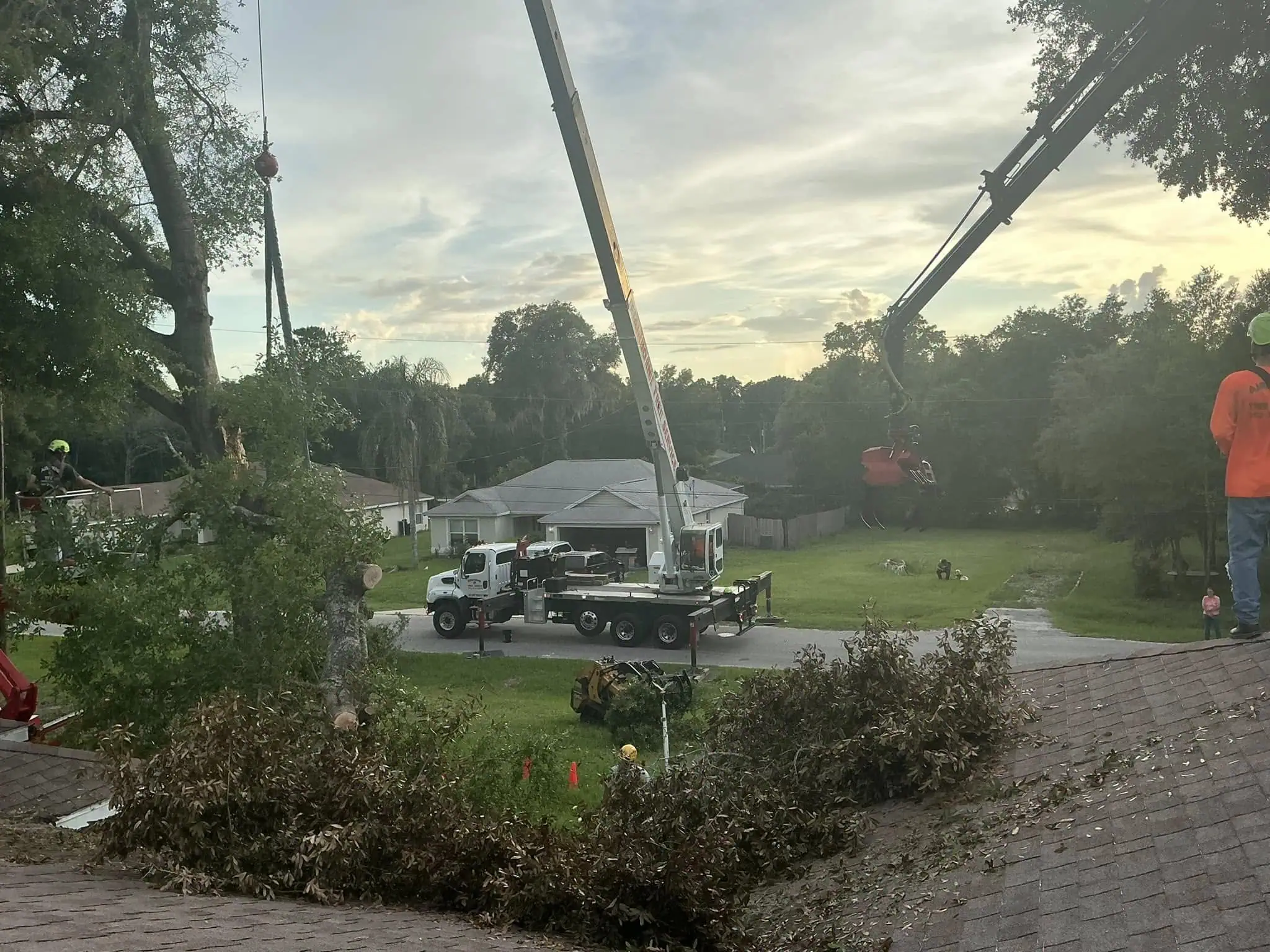
An emergency usually means a tree or a big limb has already fallen, is falling right now, or poses an immediate threat to people or property. Think of a tree leaning way over after strong winds, a huge branch on your roof, or even a whole tree blocking the road. In these cases, you need to act fast, but that action should always be calling in the pros. Seriously, don’t try to clear fallen trees or branches yourself, especially if power lines are involved. Downed lines can kill you, and only utility companies or trained emergency tree service folks should go near them. Airborne Tree Service offers 24/7 emergency help, using advanced grapple saw trucks and remote-control cranes to safely tackle even the toughest and most dangerous tree removal jobs.
We’ve Got Answers to Your Questions
How Can I Tell if a Tree is Dead or Dying?
It’s usually pretty obvious when a tree’s struggling. You might see branches that snap too easily, hardly any leaves when they should be lush, or leaves that are always discolored and wilting. If buds aren’t appearing in spring, or if the bark is peeling heavily, chances are it’s not a healthy tree. When you suspect a tree’s dead, getting a professional opinion is just smart. They can tell you if it’s actually hazardous.
My Tree’s Tilting! What’s Next?
A sudden tilt in your tree, or an existing lean that gets noticeably worse, is a huge red flag. Take a look for soil pushed up around its base. That’s a strong indicator the root system is tearing, and the tree’s losing its grip. Seriously, please don’t try to prop it up on your own. Instead, call a certified arborist, like Airborne Tree Service, right away for an urgent inspection. They can check its stability and let you know if it needs support or a dangerous tree removal.
Are All Broken Branches Really a Problem?
Honestly, a tiny broken twig isn’t usually a big deal. However, large broken branches, especially those just hanging there or resting on other parts of the tree, are a serious risk. We call these "hangers" or even "widow makers" because they can drop without warning, potentially causing injury or damage. You really want a professional arborist to assess and safely remove any significant broken branches to prevent a hazardous situation.
How Often Should an Arborist Check My Trees?
If you’ve got older trees, or perhaps some that just don’t look quite right, I’d honestly suggest having a certified arborist take a look every year. For younger, healthier trees, an inspection every couple of years might be enough. Regular checks, in my experience, really help us catch issues early. That way, we can get things sorted in advance and stop a tree from becoming a real hazard later on, which saves you both money and a ton of stress.
Can Tree Roots Truly Damage My Home’s Foundation?
Oh, absolutely. Aggressive tree roots can really mess with house foundations, sidewalks, and even underground pipes, especially if the tree’s planted too close to your home. Roots are constantly searching for moisture, so any tiny crack in your foundation or pipes is like an open invitation. If you think a dangerous tree’s roots are causing problems, please get an arborist involved. They’ll help you figure out the best approach, whether it’s root pruning or, in some cases, taking the tree out completely.
Wrapping Things Up
Honestly, recognizing the red flags of a hazardous tree is crucial for any Central Florida homeowner. From strange fungal growth and rotting wood to weak spots and root issues, these signs practically scream potential danger to your property and the people you care about. Getting a tree inspection in advance and keeping up with maintenance is truly your best defense against unexpected tree failures. Don’t mess around with a dangerous tree; the risks are just too high, in my opinion. For truly reliable safety, precision, and the peace of mind that comes from over 40 years of specialized experience, you’ll want to call Airborne Tree Service. Get in touch with us today for a complete tree inspection or to chat about safe, efficient removal for those risky trees.